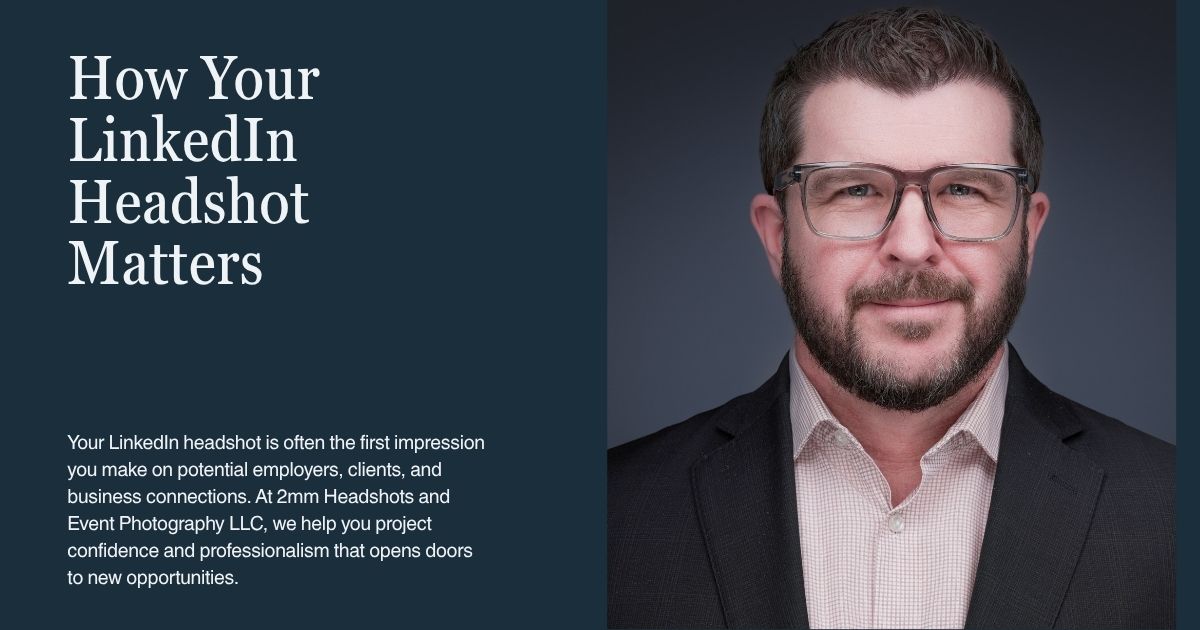
Picture this. A decision-maker somewhere in the Dallas-Fort Worth metroplex just heard your name in a meeting. Maybe a colleague recommended you. Maybe you sent a proposal. Before they call you, before they read a single line of your profile, they do what everyone does now — they look you up on LinkedIn. And in the time it takes their eyes to flick across the screen and land on your photo, they have already started forming an opinion about whether you are someone worth their time.
That moment is not a metaphor we picked at random. It is the whole idea behind the name 2mm. Your first impression is not made in the handshake, the interview, or the Zoom call. It is made in that tiny, involuntary flicker — roughly two millimeters of eye movement — when someone first sees your face.
People judge the photo before they judge the person
It feels unfair, but it is how human attention works. Long before a viewer reads your headline or scrolls to your experience, their brain has already processed your photo and assigned it a feeling: confident or unsure, current or dated, professional or improvised. By the time they actually read your words, that feeling is coloring everything.
A blurry crop from a wedding, a selfie in your car, a photo that is clearly five jobs old — none of these are disasters on their own. But each one quietly asks the viewer to lower their expectations. And in a competitive market like DFW, where the person looking at your profile almost certainly has three other tabs open with three other candidates, you do not want anything asking them to expect less.
What a strong headshot actually communicates
A professional headshot is not about vanity. It is a piece of information. Done well, it tells the viewer several things at once, before you have said a word:
- You take your work seriously enough to invest in how you present it.
- You are current — this is who they will actually meet.
- You are approachable, which makes people more willing to reach out.
- You belong in the room they are considering inviting you into.
That is a lot of weight for one image to carry. It is also exactly why it pays to get it right once rather than settle for whatever photo you happened to have.
The cost of the wrong photo is invisible — and that is the problem
Here is the tricky part. When a weak headshot costs you something, you never see the bill. Nobody emails to say they passed on you because your photo looked dated. The opportunity simply goes quiet. The meeting that would have happened just… does not. You cannot fix a problem you never get told about.
That is why so many professionals walk around with a LinkedIn photo that is actively working against them and have no idea. The photo is not bad enough to embarrass anyone. It is just bad enough to cost them — quietly, repeatedly — without ever leaving a trace.
Getting it right is easier than you think
The good news: fixing this is one of the highest-return, lowest-effort moves a professional can make. A proper headshot session takes well under an hour. The image you walk away with works for you everywhere — LinkedIn, your company bio, speaking proposals, your email signature, conference materials — for years.
At 2mm Headshots and Event Photography, that is what I have done professionally since 2008 for business professionals across the Dallas-Fort Worth area — more than 30,000 people photographed in all, for executives, teams, realtors, attorneys, and entrepreneurs. The goal is always the same: a photo that makes that 2mm moment work in your favor instead of against you.
If the photo on your LinkedIn profile right now is not the first impression you would choose to make, it is worth fixing. Get in touch to book a session — and let the next person who looks you up decide, in that first blink, that you are exactly who they want in the room.
Want the complete picture beyond just the photo? The Ultimate LinkedIn Profile Guide covers your photo, headline, and About section in depth.

Leave a Reply