THE MODEL PORTFOLIO BLUEPRINT™
Build a Modeling Portfolio That Shows Agencies What They Need to See
A complete guide to digitals, headshots, full-body images, portfolio range, comp cards, wardrobe, and preparation — everything that goes into building and maintaining an agency-ready modeling book.
30,000+
PEOPLE PHOTOGRAPHED
Since 2008
EXPERIENCE YOU CAN TRUST
2MM Method™
POSE & EXPRESSION COACHING
Real-Time
TETHERED IMAGE REVIEW
DFW + Travel
STUDIO & ON-LOCATION
Written and reviewed by Peter Szpakowski, founder of 2mm Headshots & Event Photography — more than 18 years of professional photography experience and 30,000+ people photographed. Last updated July 2026.
THE FOUNDATION
Why a Portfolio Is Not Just a Collection of Pretty Photos
Agencies and clients are evaluating usefulness, not simply attractiveness. Every photograph in a modeling portfolio exists to answer a specific question: what do you look like from the front, from the side, in motion, in stillness, in character, in real working light.
A portfolio built from whatever photos happen to look good often reads as less professional than a smaller, deliberately built set. Five images that each do a different job outperform fifteen images that all show the same angle, the same expression, the same outfit.
The goal is clarity, range, and truthfulness. A portfolio still has to look like the person who walks into the room. If the images oversell what the camera can’t confirm, the mismatch surfaces the moment someone meets you in person — and that costs more trust than a plainer, more honest portfolio ever would.
Think of a portfolio as evidence — evidence of how you photograph, what you can do in front of a camera, and where you’re likely to fit. Building it deliberately, rather than collecting whatever turned out well, is what separates a book that works from one that doesn’t.
THE ECOSYSTEM
Digitals, Headshots, Portfolios & Comp Cards
These terms get used interchangeably, but they aren’t the same thing. Here’s what each one actually is, what it communicates, and when it’s used.
| Image Type | What It Is | When It’s Used | Polish Level |
|---|---|---|---|
| Digitals (“polaroids”) | Simple, minimally edited photos showing true current appearance | Initial submissions, ongoing updates | Little to no retouching |
| Model headshot | Clean, well-lit, face-forward portrait | Submissions, comp cards, profiles | Light, honest retouching |
| Full-body image | Head-to-toe shot showing proportion and stance | Submissions, portfolios, comp cards | Light retouching |
| Three-quarter image | Angled shot between headshot and full-body | Portfolios, range demonstration | Light retouching |
| Profile (side) image | Shows facial structure from the side | Submissions, portfolios | Light retouching |
| Portfolio/editorial image | Styled, concept-driven image | Developed portfolio, online book | More creative finishing acceptable |
| Commercial/lifestyle image | Natural, relatable, “real life” styling | Developed portfolio | Light, natural retouching |
| Beauty image | Close, detailed shot of face, skin, hair | Beauty-specific submissions and portfolios | Minimal, detail-preserving |
| Comp card | Printed or digital card with a few key images and stats | Agency submissions, castings | Matches the images it draws from |
| Online portfolio/book | The full curated collection, in sequence | Ongoing representation, submissions | Reflects each image’s own standard |
| Social content | Casual images posted to social platforms | Personal use, sometimes supplementary | Not a substitute for portfolio images |
THE CORE FIVE
The Five Essential Images
Most working portfolios are built around five core shots. Exact requirements vary by agency and market — always check current submission instructions before commissioning or submitting photography.
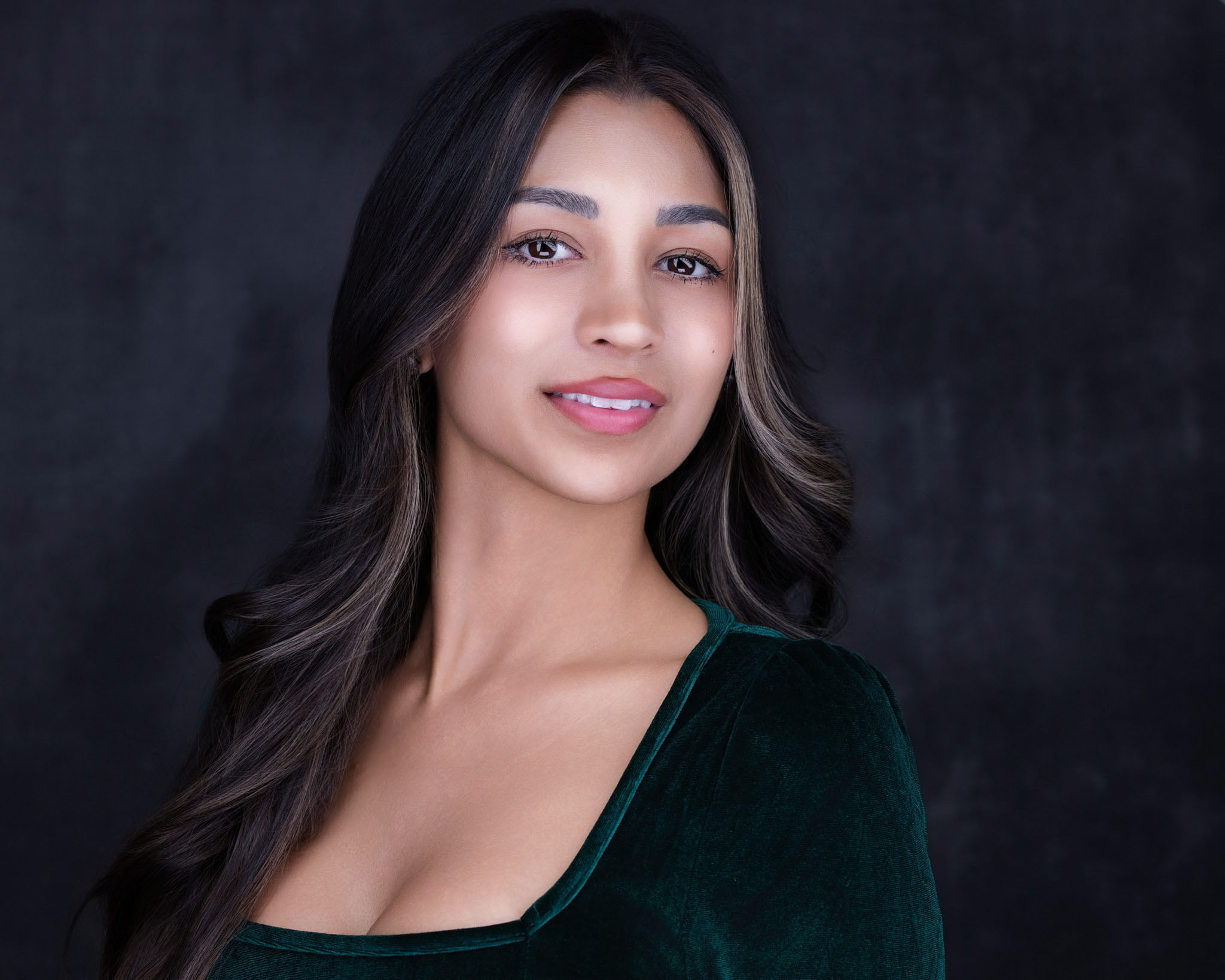
1. Clean Model Headshot
The plainest, most legible version of your face — the reference image an agency or client can trust as accurate.
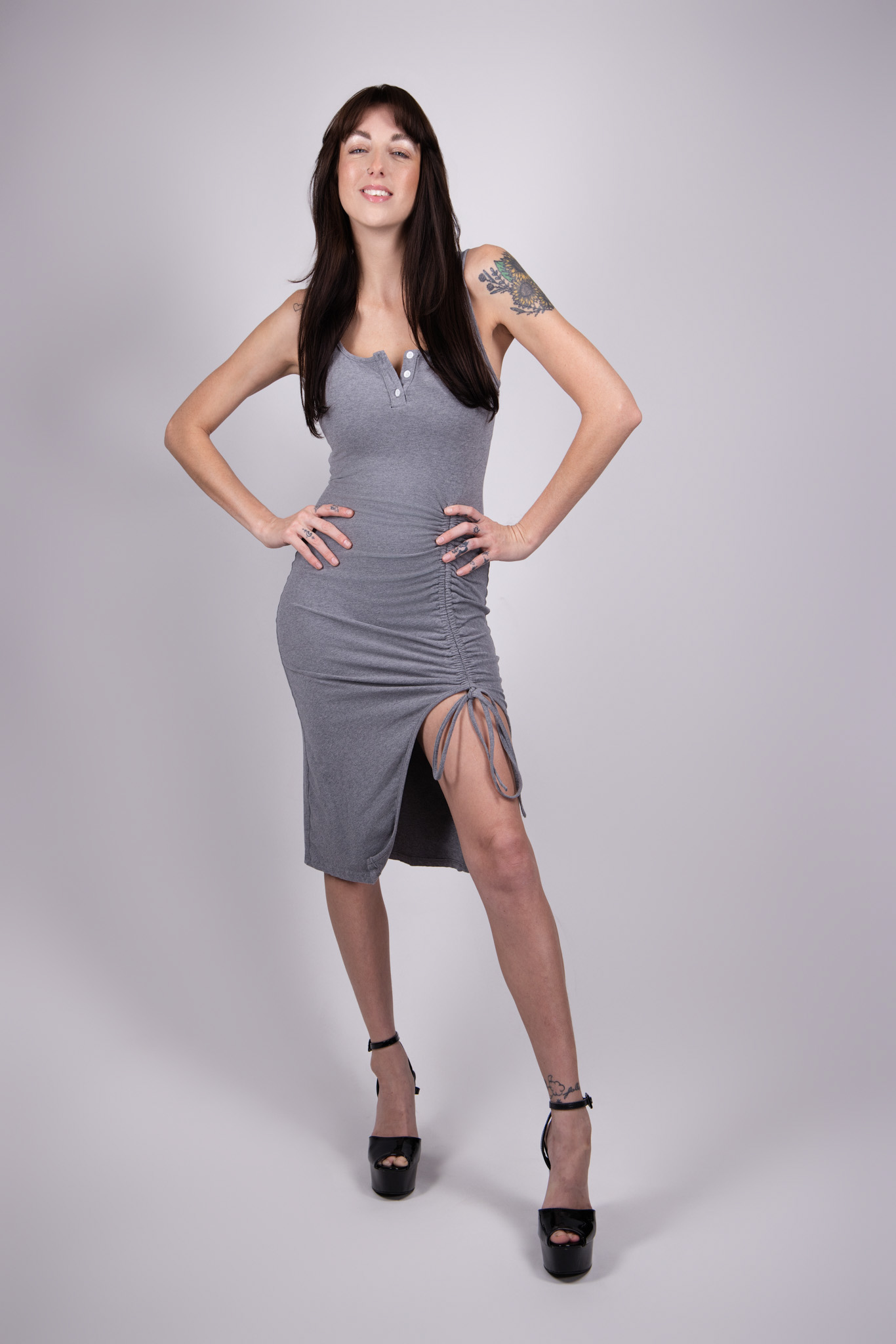
2. Front-Facing Image
Shows posture, symmetry, and a natural, camera-comfortable presence, straight to camera.
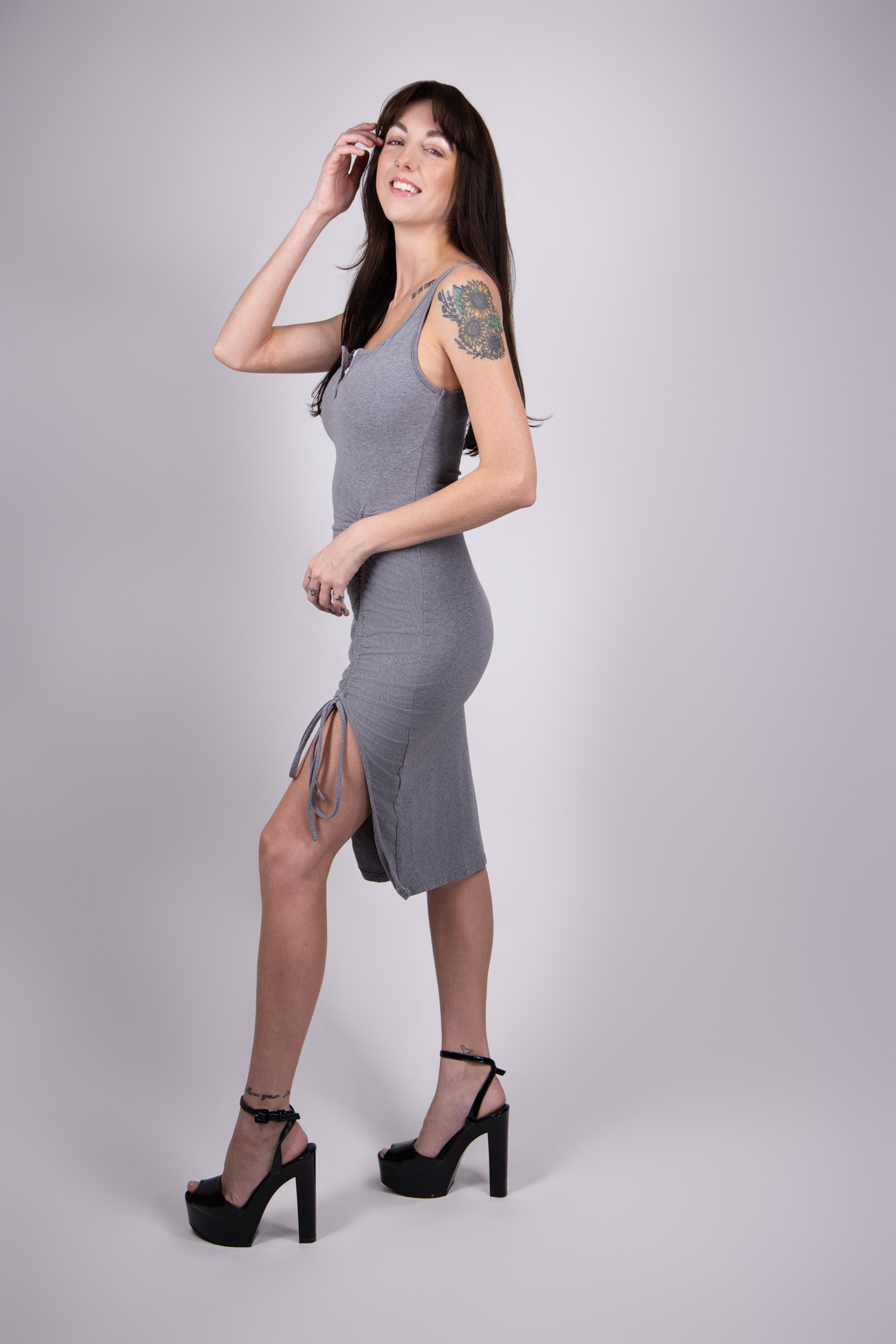
3. Side Profile
Shows facial structure and line from an angle a straight-on shot can’t provide.
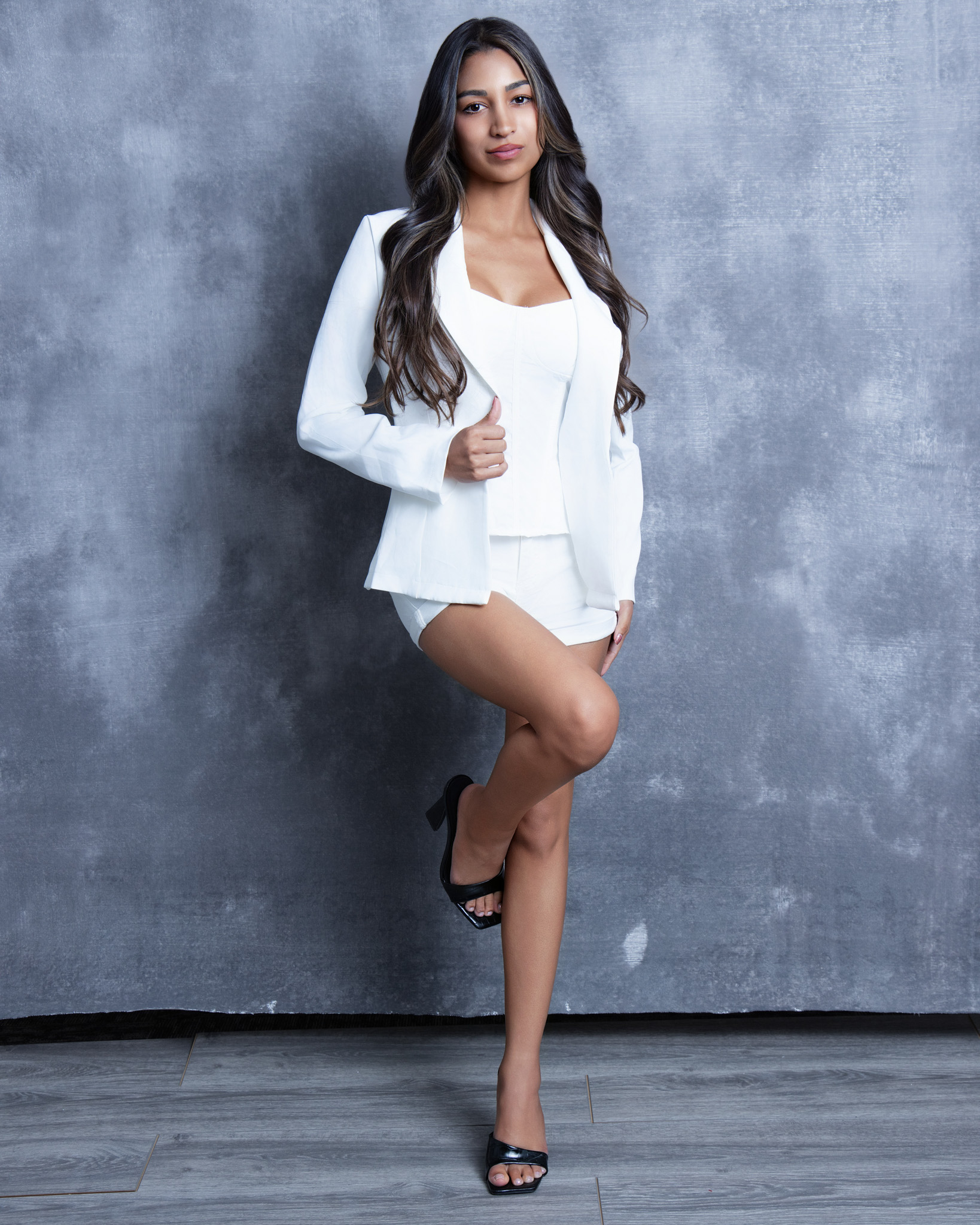
4. Full-Body Image
Shows proportion, stance, and how you carry your whole body — information a face-only image can’t give.
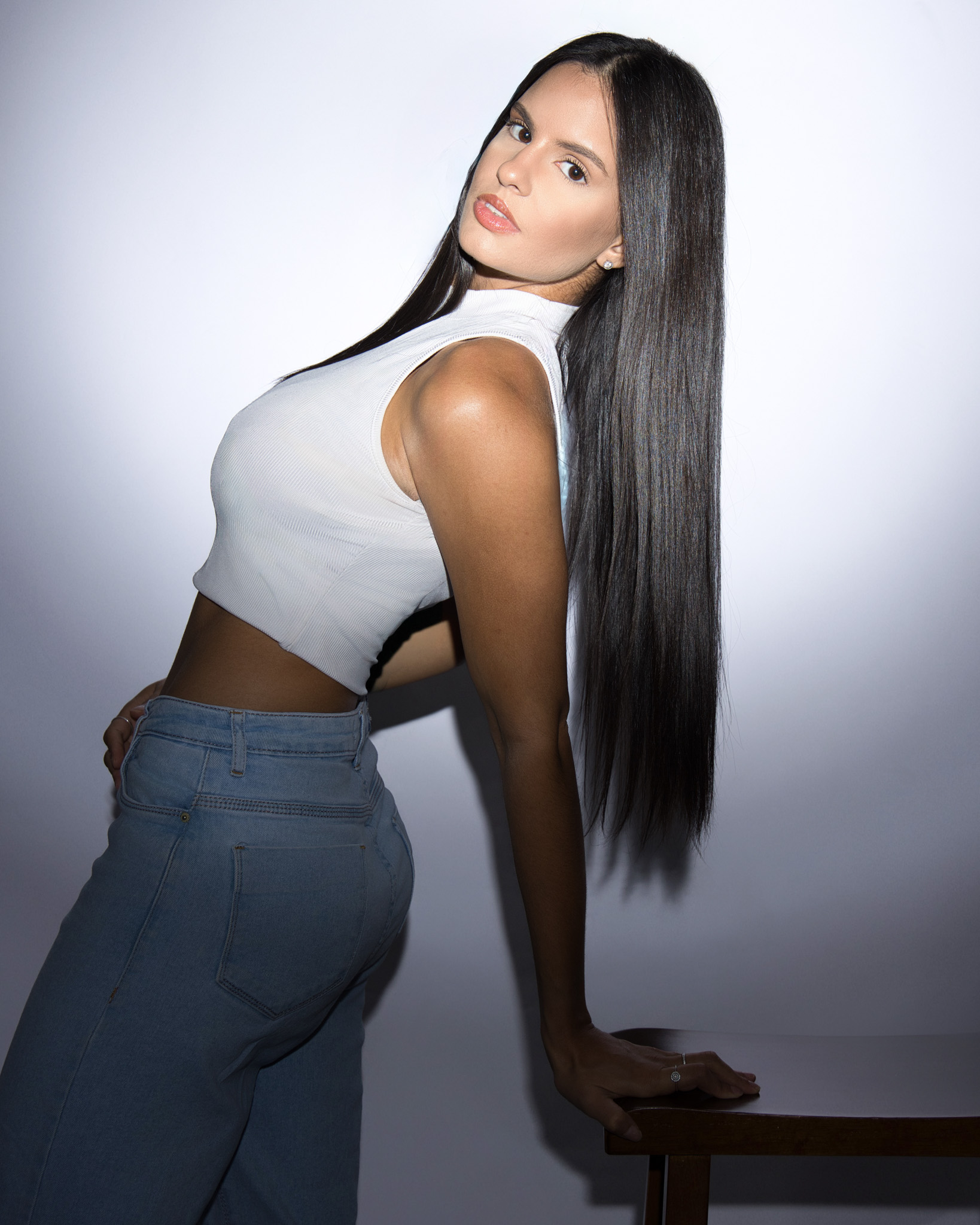
5. Creative or Editorial Impact Image
Demonstrates range and personality beyond the standard reference shots — the image that makes a viewer pause.
WHERE YOU START
Beginner Portfolio vs. Developed Portfolio
Beginner or Aspiring Model
- Accurate digitals
- Clean headshot
- Full-body image
- Simple styling
- Limited retouching
- Honest representation
- A small number of versatile images
Developed or Working Model
- Updated digitals
- Strong book opener
- Commercial and/or editorial range
- Tear sheets when available
- Images targeted to your market
- Current book reflecting actual appearance
- Outdated or redundant work removed
New models don’t need to pretend they already have a developed career. A smaller, honest set of images is a stronger start than an inflated one.
FIND YOUR LANE
Choose Your Modeling Lane
Requirements differ by agency, market, client, and assignment — there’s no universal rulebook. But each category tends to reward a different kind of image.
Commercial
Approachable, relatable expression. Natural warmth reads better than intensity. Common mistake: over-posing instead of looking natural.
Lifestyle
Candid-feeling movement and genuine reactions. Wardrobe should feel like real life, not costume. Common mistake: styling that looks too “shoot-y.”
Fashion
Strong lines, controlled expression, willingness to hold a directed pose. Common mistake: smiling when the look calls for intensity.
Runway
Movement, walk, and consistent energy across frames. Common mistake: a portfolio with no movement or walking images at all.
Editorial
Concept-driven, willing to take creative risks. Common mistake: playing it safe when the category rewards boldness.
Beauty
Close, clean detail on skin, hair, and features. Common mistake: heavy makeup that hides rather than highlights.
Fitness
Clear lines, controlled tension, confident stillness. Common mistake: over-retouching that erases natural muscle definition and texture.
Mature
Authority, warmth, and lived-in confidence. Common mistake: over-smoothing that erases the very qualities clients are booking.
Parts
Extreme attention to the specific feature — hands, feet, or hair. Common mistake: no clean, close, distraction-free detail shots.
Child & Teen
Natural, unforced expression, with parents avoiding over-direction. Common mistake: styling or posing that reads more adult than the category calls for.
THE RAW MATERIAL
Model Digitals Explained
Digitals aren’t a lesser version of a portfolio photo — they serve a different purpose entirely. A digital’s whole job is to show what you actually look like, right now, with as little interference as possible. They are not meant to be glamorous or heavily styled.
Agencies request digitals so they can evaluate true current appearance before investing time in representation or a submission. A good set of digitals typically includes:
- A plain or neutral background
- Natural light or simple, even, controlled lighting
- Minimal makeup
- Hair worn naturally or simply styled
- Fitted, neutral wardrobe — no busy patterns or visible logos
- Front, profile, three-quarter, and full-body views
- Simple, minimal footwear appropriate to the category
Heavy retouching is inappropriate for digitals. The entire point is an accurate reference — over-editing defeats the purpose and creates a mismatch that surfaces the moment someone meets you in person.
At-home digitals taken in good natural light can be perfectly acceptable for an initial submission. Professional assistance becomes useful when lighting, consistency, or technical quality is getting in the way of an accurate result — not to make digitals look polished, but to make them look correct.
How often you refresh digitals depends on your market and category, but a reasonable general guideline is whenever your appearance changes meaningfully, and periodically even when it hasn’t.
THE SUBMISSION TOOL
The Comp Card
A comp card (short for composite card, sometimes called a “sed card”) is a compact printed or digital summary of your portfolio — typically one strong image on the front and a small, curated set on the back, alongside basic stats and contact or representation information.
Image selection matters more than volume. The front image has to identify you instantly and clearly. The back images should each show something the front doesn’t — range, not repetition. Measurements and contact information should be current: outdated images or inaccurate stats damage trust the moment they’re checked against reality, and they’re always checked.
Digital comp cards are increasingly common for online submissions; printed cards are still used at castings and events. Either way, follow the specific instructions of the agency or platform you’re submitting to — format, dimensions, and required information vary.
Illustrative wireframe — placeholders only, not a real comp card
FRONT
[ STRONG HEADSHOT OR FULL-BODY IMAGE ]
[ MODEL NAME ]
[ REPRESENTATION / CONTACT INFO ]
BACK
[ IMAGE ]
[ IMAGE ]
[ IMAGE ]
[ HEIGHT ] · [ BUST/CHEST ] · [ WAIST ] · [ HIPS ] · [ SHOE ] · [ HAIR ] · [ EYES ]
THE ORDER THAT SELLS
Portfolio Sequencing
How you order a portfolio changes how it’s read. A few principles:
- Lead with a strong, clear image that establishes identity quickly
- Demonstrate range without looking inconsistent
- Avoid placing several nearly identical photographs together
- Balance close-up, mid-length, and full-body frames
- End with a memorable image
- Remove weak images rather than using them as filler
- Tailor the sequence to the intended market or submission
Keep It
- Images that are recent and accurate
- Each image doing a different job
- A clear, confident lead image
- A genuine full-body image
- Images matched to your intended category
Remove It
- Anything more than a couple of years old
- Near-duplicate poses or expressions
- Heavily filtered or over-retouched images
- Anything that no longer looks like you
- Images unrelated to your intended category
WARDROBE PLANNING
Wardrobe for Modeling Images
Wardrobe needs shift by category, but a few principles apply broadly, regardless of who’s wearing them:
- Clean, fitted basics for digitals — nothing baggy, patterned, or logo-heavy
- Commercial wardrobe that feels like real life, not costume
- Editorial wardrobe that can be bolder, more textured, more conceptual
- Fitness wardrobe that shows line without distraction
- Layering options so a single session can produce more range
- Neutral colors as a reliable default, with texture used deliberately
- Simple, intentional accessories — nothing that competes with your face
- Shoes that suit the category, even when they won’t always be in frame
- Properly fitted undergarments that won’t show lines under fitted pieces
- Everything fitted correctly — ill-fitting clothing reads on camera
- Bringing more options than you’ll ultimately use
For the complete wardrobe framework across every look and category, see the Professional Wardrobe Blueprint™.
PRESENTATION
Hair, Makeup, Skin & Grooming
- Keep digitals natural — minimal makeup, hair worn as it normally falls
- Professional hair and makeup can help for developed portfolio or editorial work, when it fits the concept
- Avoid dramatic last-minute changes — a new haircut or color the day before a session removes your margin for error
- Schedule haircuts, coloring, tanning, facials, or other skin treatments at least a week or two out, never the day of
- Clean, neutral nails and well-kept hands, since hands appear in more frames than people expect
- Facial hair, if applicable, should be groomed to whatever look you and your team have planned in advance
- Hydration and sleep in the days before a session show up on camera more than most last-minute fixes
- Bring a basic touch-up kit — blotting sheets, a comb, a small mirror
- The goal throughout is honest representation, not a temporary transformation the camera can’t sustain over time
ON CAMERA
Posing, Movement & Expression
Good modeling posing isn’t a set of frozen positions. It’s a set of adjustable fundamentals — posture, weight distribution, shoulder and hip angles, hand placement, and neck and chin position — that create clean lines and read well on camera, combined with movement between frames rather than a series of static holds.
Facial range and eye-line control matter as much as body position. Commercial work generally calls for warmth; editorial work often calls for a more controlled intensity. Exaggerated or social-media-style posing can work against you when it doesn’t fit the market you’re aiming for.
This is where coaching earns its place in the session. The 2MM Method™ is built around small, real-time adjustments — a shift in the chin, a change in weight, a different eye-line — guided by what the camera is actually showing on a tethered monitor, not guesswork. More on that below.
READY CHECK
Is Your Modeling Portfolio Ready for Agency Review?
Answer honestly. This is a self-check, not a prediction — it won’t tell you whether an agency will say yes, only where your portfolio stands today.
Prefer to score it yourself? Count how many times you answered “Yes,” then match your total below: 0–2 Yes — Start With Clean Digitals. 3–5 Yes — Build Your Core Portfolio. 6–8 Yes — Refresh and Refine Your Existing Book.
THE TIMELINE
Your Session Planning Timeline
TWO TO FOUR WEEKS BEFORE
Define your goals, identify your modeling category, review any agency instructions, plan a shot list, arrange hair and makeup if needed, and begin wardrobe planning.
ONE WEEK BEFORE
Confirm wardrobe, prepare skin, hair, nails, and accessories, avoid dramatic appearance changes, and confirm session logistics.
THE DAY BEFORE
Hydrate, sleep, steam your clothing, pack carefully, and avoid experimental grooming or beauty treatments.
SESSION DAY
Arrive on time, bring options, communicate your goals, be prepared to move and take direction, and review frames in real time.
AFTER THE SESSION
Choose images based on purpose, avoid excessive retouching, prepare correct file formats, build your comp card or sequence, and follow each recipient’s submission rules.
HONEST EDITING
Professional Retouching: How Much Is Too Much?
Natural skin texture should remain visible. Temporary blemishes may reasonably be corrected; permanent features generally should not be altered away. Body proportions should never be edited in a way that misleads. Accurate representation protects your trust with agencies and clients — the moment retouching creates a gap between photo and person, that trust is what gets spent.
| Digitals | Developed Portfolio / Editorial | |
|---|---|---|
| Skin texture | Fully visible, untouched | Natural texture retained |
| Temporary blemishes | Generally left as-is | May be corrected |
| Permanent features | Never altered | Generally left recognizable |
| Body proportions | Never altered | Never misleadingly altered |
| Overall editing level | Minimal to none | More creative finishing acceptable |
DELIVERY
File Preparation & Delivery
- Keep both a high-resolution master and a web-optimized version of each image
- JPEG is a commonly accepted format for submissions, though requirements vary by recipient
- Use a standard color profile so images display consistently across devices
- Provide horizontal, vertical, and square crops when a platform can use them
- Name files clearly and consistently so nothing gets lost in a submission
- Keep an organized master archive you can pull from as needs change
- Always check the current specifications of the platform or agency before uploading — requirements change and vary by recipient
AVOID THESE
Common Model Portfolio Mistakes
- Heavy filters or over-retouching
- Outdated images that no longer match your appearance
- Too many similar photographs instead of genuine range
- Inconsistent image quality across the set
- Trendy social images used in place of proper digitals
- Wardrobe that overpowers rather than supports you
- An unclear modeling category
- Missing full-body images
- Photographs that no longer resemble you
- Ignoring an agency’s specific submission instructions
- Building an expensive portfolio before understanding your intended market
- Paying anyone who guarantees representation, bookings, or agency acceptance — no legitimate agency or photographer can promise that outcome
STAY SAFE
Working Safely and Professionally
This is general guidance based on industry norms, not legal advice — requirements and business practices vary, so use your own judgment alongside it.
- Research photographers, agencies, and opportunities before committing time or money
- Review portfolios and business information before booking
- Get written agreements and usage expectations in place before a shoot
- Understand where and how images may be published or used
- Bring a parent or legal guardian for any minor’s session
- Confirm in advance who will be present at the session
- Avoid any pressure to exceed agreed-upon wardrobe or concepts
- Know that legitimate requirements and business models vary widely across agencies and markets
- Be cautious of anyone offering guaranteed representation or booking claims
DFW CONTEXT
Building a Portfolio for Dallas–Fort Worth Opportunities
Dallas–Fort Worth has an active, established modeling and casting community spanning commercial, fashion, print, and on-camera work. Requirements differ by agency and by market, so always verify current submission instructions directly with the organization you’re contacting rather than relying on general advice — including this guide.
For DFW-specific submission context and locally built portfolio packages, see Model Headshots & Portfolios.
THE 2MM METHOD™
How Coaching Supports a Modeling Session

- Personalized pose and expression coaching, including for complete beginners
- Small physical adjustments — chin, shoulders, hands, weight distribution — that change how structure and confidence read on camera
- Real-time tethered review, so you can see and adjust in the moment rather than guessing
- Intentional variation across frames without creating a false version of you
- Lighting selected for the specific purpose of each image
- Honest, natural retouching
- Studio and on-location options
- Help understanding which image serves which portfolio purpose
Frequently Asked Questions
What should a beginner modeling portfolio include?
A clean headshot, an accurate front-facing image, and a genuine full-body image, all lightly retouched and honestly representative — a small, versatile set rather than a large, inconsistent one.
Do I need professional photographs before approaching an agency?
Not necessarily for an initial submission — many agencies accept simple digitals first. Professional photography becomes more valuable once you’re building a fuller portfolio or targeting specific categories.
What is the difference between digitals and a model portfolio?
Digitals are simple, minimally edited reference photos showing true current appearance. A portfolio is a broader, curated collection built to demonstrate range and fit for specific categories.
How many images should be in a modeling portfolio?
There’s no fixed number. A smaller set where every image does a distinct job is stronger than a large set padded with near-duplicates.
What should I wear for model digitals?
Fitted, neutral basics with no busy patterns or visible logos — the goal is showing your true proportions clearly, not styling a look.
Should model digitals be retouched?
No, or as close to none as possible. Digitals exist to show accurate current appearance — heavy editing defeats their purpose.
What is a comp card?
A compact printed or digital summary of your portfolio — typically a strong front image, a small set of range images on the back, and basic stats or contact information.
Do I need both headshots and full-body photographs?
Generally yes — each shows something the other can’t, and most submissions expect both.
How often should I update my portfolio?
Whenever your appearance changes meaningfully, and periodically even when it hasn’t — needs vary by market and category.
Can I create a portfolio before signing with an agency?
Yes. A well-built, honest portfolio is often exactly what helps you get noticed in the first place.
Can one portfolio work for both commercial and fashion modeling?
Sometimes, if the images are chosen carefully. More often it works best to build toward your primary category first, then add range images for a second one.
Do you photograph children and teenagers?
Yes, with age-appropriate direction and a parent or guardian present. See Model Headshots & Portfolios for details.
Should parents attend a minor’s session?
Yes. A parent or legal guardian should be present for any minor’s modeling session.
Can modeling sessions take place on location?
Yes — both studio and on-location sessions are available across DFW, with travel options beyond the immediate area.
Build a Portfolio With a Purpose Behind Every Frame
Whether you’re creating your first digitals, building a complete portfolio, or refreshing an established book, your images should accurately show who you are and where you fit.
Explore More from 2MM Headshots
Eight 2MM services that pair well with what you just read — same coaching, same studio, same standard.
Executive Headshots →
C-suite and SVP-level authority portraits. The single highest-ROI image you own.
Corporate Headshots →
Brand-aligned portraits for VPs, Directors, and mid-senior managers — built around your company’s brand spec.
Team Headshots →
Mobile Elite Studio at your DFW office — 60–80 employees photographed in one day.
LinkedIn Headshots →
Algorithm-friendly, recruiter-ready profile photos. The portrait every prospect sees first.
Professional Headshots →
Warm, approachable portraits for every working professional — the 2MM Method™ for individual sessions.
Branding & Lifestyle Portraits →
A full visual brand library — multiple looks, lifestyle photography, video — for founders and thought leaders.
Pricing →
Transparent three-package pricing for individual sessions. Team programs custom-quoted.
Board of Directors Photography →
Composite board portraits, annual report covers, IR-deck inclusion. NDA-friendly for IPO + M&A boards.