
Before the panel votes on you, before the reporter agrees to the interview, before the search committee schedules the second call — someone opens a browser and types your name.
It happens more often than most executives realize. A board recruiter vetting candidates for an open seat. A journalist deciding whether to run your quote. A prospective client checking who they’re about to meet. In every case, the first real impression doesn’t happen in the room. It happens on a screen, and it happens fast — usually in the two or three seconds it takes to glance at a headshot before scrolling down to the bio underneath.
That photo is doing more work than most executives give it credit for. It isn’t just a picture of a face. It’s the first data point in a decision about whether you’re worth taking seriously.
What People Read Before They Read Your Bio
Nobody consciously studies a headshot the way they’d read a paragraph. The evaluation is faster and less deliberate than that — a quick, largely unconscious read of gaze, posture, expression and overall presentation that happens before a viewer has processed a single word of your title or your company.
Is the gaze direct, or evasive? Does the posture suggest ease, or does it look tense and guarded? Does the photo look current and intentional, or like it was cropped out of a company holiday party from a few years back? Is the lighting clean and professional, or is there a window blowing out one side of the face?
None of those questions get asked out loud. They get answered in a couple of seconds — long before your LinkedIn headline, your bio, or your credentials get a chance to make their case. That’s true whether the person doing the reading is a journalist, a client, a fellow board member, or a recruiter.
The Five Visual Signals of Confident Leadership
Across thousands of sessions, the same handful of visual signals show up again and again in photographs that read as confident and credible. None of them require dramatic styling or an exaggerated pose — they’re subtle, which is exactly why they’re easy to get wrong without realizing it.
- Eye engagement. A direct, settled gaze reads as presence. Eyes that are slightly unfocused, squinting against light, or angled away from the lens read as distracted or uncertain — even if the person felt perfectly confident in the moment.
- A genuine expression, not a held one. A real micro-expression looks different from a smile that’s being maintained for the camera. Viewers pick up on the difference almost instantly, even when they can’t articulate what feels off.
- Relaxed, grounded posture. Shoulders set back and even, rather than raised or rounded forward, signal ease. Tension in the shoulders is one of the fastest ways a photo starts to look defensive instead of composed.
- Head position. A slight forward lean and a level chin generally read as engaged and confident. A chin tucked too far down can look uncertain; tilted too far up can look dismissive.
- Overall polish. Clean lighting, an uncluttered background, and wardrobe that fits well all signal the same underlying message — this is someone who takes their professional presentation seriously.
Individually, each of these is a small thing. Together, they’re most of what separates a headshot that earns a second look from one that gets scrolled past.
Confidence vs. Arrogance: Finding the Right Balance
It’s worth saying plainly: confidence in a headshot does not require a wide smile, an aggressive stance, or a stereotypical power pose. Overcorrecting in that direction tends to produce photos that feel performative rather than authentic — and for many executives, particularly in more conservative fields like finance, law, or healthcare, an overly assertive pose can undercut credibility rather than build it.
The right expression depends on who’s going to see the photo and how it’s going to be used. A founder’s LinkedIn photo might carry more warmth and energy than a board portrait intended for a governance page or a press kit. A litigator’s headshot might lean more composed and measured than a startup CEO’s. There isn’t one correct expression — there’s an expression that matches the role, the audience, and the context the photo will actually be seen in.
Why Camera Discomfort Shows Up in Photographs
Most executives are not naturally comfortable in front of a camera, and that discomfort tends to show up in specific, fixable places: a jaw that tightens, a smile that gets held a beat too long, shoulders that creep up toward the ears, hands that don’t know what to do. None of this means the person isn’t confident in real life — it just means a lens is an unfamiliar audience, and the body responds to unfamiliar audiences with tension.
The problem usually isn’t nerves. The problem is that an untrained eye — including the executive’s own, mid-session — often can’t tell the difference between a natural pause and a held, tense expression until after it’s already been captured.
How Expression Coaching Changes the Result
This is where a skilled photographer earns their fee. Peter Szpakowski, who has been professionally photographing people since 2008 and has now photographed more than 30,000 of them, built the 2mm Method™ around exactly this problem: small, specific adjustments — a slight release through the jaw, a small shift in shoulder position, a change of a couple of millimeters around the eyes — that move a photo from tense to genuinely at ease. It’s coaching, not posing. The goal is to draw out an expression that already belongs to the subject, not impose one that doesn’t.
Peter is a member of Peter Hurley’s Headshot Crew and Professional Photographers of America, and the studio is a BBB Accredited Business — credentials that reflect an ongoing commitment to the craft rather than a one-time certification. In practice, that means camera-shy executives regularly leave a session with a photo that looks nothing like how nervous they felt walking in.
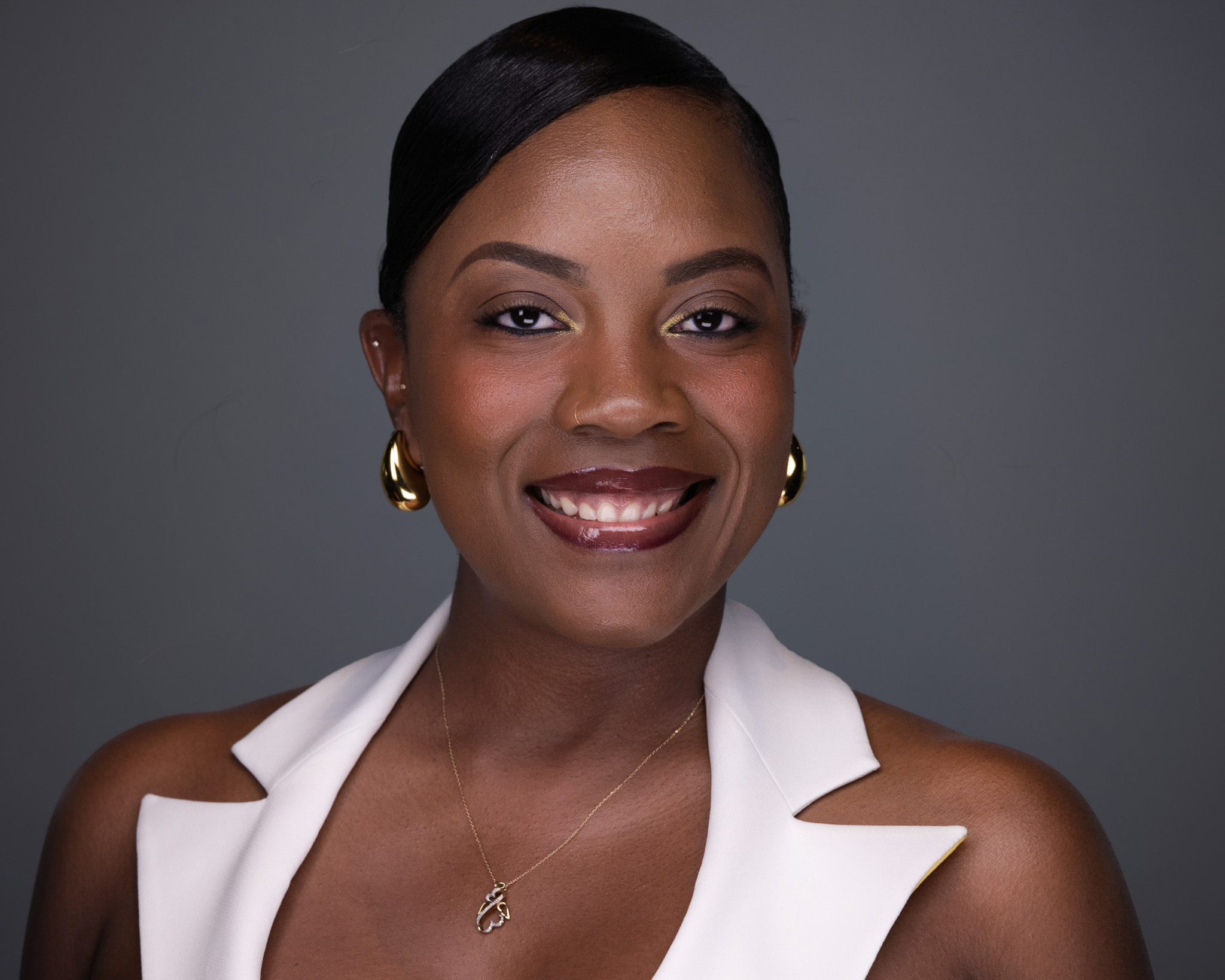
The Executive Headshot Confidence Check
Before deciding whether your current headshot needs to be replaced, it’s worth evaluating it honestly against the same signals discussed above. Pull up your current photo and ask:
- Does this photo still look like you today — same general hairstyle, weight, and appearance — or is it several years out of date?
- When you look at the eyes, do they look present and engaged, or tired, distracted, or slightly unfocused?
- Does the expression look natural, or does it look like it was held a beat too long for the camera?
- Are the shoulders relaxed and level, or raised, rounded, or visibly tense?
- Is the lighting even and dimensional, or flat, harsh, or partially shadowed?
- Is the background clean and appropriate, or dated, cluttered, or distracting?
- Is the crop and framing right for where the photo actually gets used — LinkedIn, a company bio page, a press kit — or does it feel like an afterthought crop from a bigger picture?
If two or three of these give you pause, the photo is probably sending a signal you didn’t intend.
When the Problem Is the Photograph — Not the Person
It’s easy for an executive to internalize a bad headshot as a personal failing — “I’m just not photogenic.” In the overwhelming majority of cases, that isn’t what’s actually happening. A headshot that reads as stiff, dated, or unapproachable is far more often the result of the photograph itself: harsh or flat lighting that flattens facial dimension, a background that competes for attention instead of receding, a crop that was never designed for how the image is now being used, or simply enough time having passed that the photo no longer resembles the person walking into the meeting.
None of those are things a person can fix by “relaxing more” for a smartphone selfie. They’re technical and directorial problems, which means they have technical and directorial solutions — the right light, the right background, the right crop, and someone experienced enough to notice tension before it gets captured.
The Next Step
If you’ve made it this far, you probably already have a sense of what your current photo is — or isn’t — communicating. That’s useful information on its own, whether or not you’re ready to do anything about it yet.
When you are, 2MM Headshots & Event Photography works with executives throughout Dallas–Fort Worth from a private studio in North Richland Hills, with on-location sessions available for teams and offices across the metroplex. Same-day delivery means a new portrait can be in your hands — and updated across LinkedIn, your company bio, and your press materials — the same day it’s taken.
If your current portrait no longer reflects the confidence and leadership presence you bring into the room, explore the executive headshot experience and see what a coached session actually looks like.

Leave a Reply